

Yolande Bouka and Zainab Monisola Olaitan | September 14, 2026
Teaching Women, Peace, and Security in an Age of Backlash against Gender Research and Activism
home / white papers / bouka & olaitan
time to read: 26 min
Introduction
2025 marked the 25th anniversary of the United Nations Security Council (UNSCR) Resolution 1325, which laid the groundwork for the Women, Peace, and Security (WPS) agenda aimed at promoting a gendered perspective on peace and security. Building on the work of transnational activist networks and civil organizations, the agenda recognizes the gender-specific impacts of conflicts on women and girls, calls for the full participation of women in all aspects of peace and security, and emphasizes women’s agency as active participants. The core pillars of the agenda are protection, in acknowledgment of the unique effects of violence on women and girls; participation, to encourage women’s involvement in all areas of peace and security; prevention, targeting the root causes of violence; and relief and recovery (UN 2022). To support the effective implementation of the WPS agenda, the UN urged member states to develop national action plans (NAPs) to guide their engagement with the resolution and to promote increased women’s participation in peace and security (UNDP 2019). Consequently, 113 countries and numerous organizations have created action plans and strategies to incorporate a gendered perspective on peace and security. WPS is also integrated into higher education, with research centers, institutes, programs, and courses furthering research, knowledge, and advocacy related to WPS (see Georgetown Institute for Women, Peace and Security).
While the recent WPS anniversary should have highlighted the progress made in recognizing the gender dimension of war and peace, there has been considerable backlash towards gender issues and WPS work. This gender backlash remains one of the main concerns among stakeholders due to its impact on WPS pedagogy and the slow progress worldwide in implementing the agenda (UNDP 2024). The targeted and rising hostility toward gender issues globally, especially regarding the rights of women and sexual and gender minorities, has manifested through attacks on pedagogy, advocacy, activism, and efforts to promote gender equality and human rights across various sectors. This backlash signals a regression in women’s rights achievements worldwide and endangers the goal of a gender-equal world (United Nations 2024). Simultaneously, it hampers ongoing efforts to protect and advance women’s rights, to the extent that feminists, gender activists (UN Women 2025), and scholars working on gender issues are viewed as disruptive forces that upset the natural order of gender relations. The field of peace and security also faces concerns about maintaining momentum and interest in promoting a gendered approach to fostering peace amidst these threats. The global backlash against gender not only hinders activism and progress toward gender equality but also threatens the teaching of gender issues in educational institutions. While this is most obviously happening in the US, it is also a serious issue in Canada and in other contexts. In Canada, some universities are suspending admission to gender studies programs due to the shifting socio-political landscape and targeted hostility (Canadian Federation of University Women 2023; Alonso 2024).
Considering the broader backlash sponsored by Western evangelical and faith-based organizations against gender issues across sectors and the current global security landscape that has heightened the vulnerability of women and gender-diverse people, it is important to explore new and innovative ways to teach WPS. This white paper addresses a central question: how do we teach WPS in an age of increased backlash against gender research and activism? How do we teach WPS in a way that rekindles the agenda’s importance in fostering a gendered perspective on peace and security? These questions are informed by a pedagogy workshop organized by the Research Network on Women, Peace, and Security (RN-WPS) in February 2025. This paper addresses the repression of women’s rights and the antagonism toward gender activism while exploring pedagogical strategies to address pre-existing challenges across various sectors. While the white paper offers some insights from the symposium discussions, it also establishes pedagogical innovations for teaching WPS in light of the changing socio-political landscape.
Insights from the Symposium
The Research Network on Women, Peace and Security held a symposium in February 2025 titled “Pedagogies for Peace: How is Women, Peace and Security Taught?” It was organized at the behest of key stakeholders in the Department of National Defence (DND) and the Canadian Armed Forces (CAF) to gain insights into how to better teach WPS within their respective institutions. The workshop recognized that teaching WPS is a strategic measure for mainstreaming gender in peace and security across international and national institutions, and emphasized the importance of capacity building to effectively implement UNSCR 1325. Drawing on the work of practitioners, researchers, and academics, the workshop featured a multi- and transdisciplinary approach to teaching WPS across three sectors: higher education, the security sector, and civil society. This provided grounds for cross-sector reflection on pedagogies for peace while learning from best practices and drawing lessons from the process. The 2-day symposium responded to conversations about pedagogical practices amid increased backlash against gender issues and also spotlighted sustainable teaching practices.
The symposium covered different themes across the three focus sectors. The first thematic session engaged how WPS is taught in the security sector, with presentations on integrating WPS and gender analysis in the professional military education curriculum, enhancing the leadership skills of women in peace and security missions, and gender training for UN staff in peacekeeping contexts. The second session asked how civil society builds capacity for WPS and featured presentations on how human rights defenders shift pedagogy to meet the moment, a gender perspective on the Yemeni conflict, and moving the WPS agenda from despair to hope. The third thematic session examined how WPS is taught in higher education; this session featured contributions from academics on how they teach WPS in their institutions, with reflections on their WPS teaching module, a pedagogical reflection on gendering peace education, a Dream Lab for teaching WPS, and adopting a cross-disciplinary lens to teaching WPS.
The second day featured an interactive teaching module on practical WPS strategies; the session included an exercise on teaching negotiation skills. The final thematic session focused on transforming military culture on WPS with presentations on how WPS is operationalized in the defence sector. Speakers discussed how WPS is applied by the CAF, including experiential learning through military memoirs as a pedagogical tool, discussions of masculinity in WPS, and gender training for combat units.
Of particular importance was the design laboratory session, where all the discussions and presentations were brought together to draw on the successes, challenges, and potential areas for growth in WPS pedagogy across the three sectors. There was an appraisal of the existence of dedicated WPS modules across different institutions, which draw on different approaches to teaching WPS. Some of the challenges identified include a hyperfocus on the ‘what’ of WPS rather than the ‘how,’ fear of backlash, and a lack of grounded, holistic teaching of WPS. Given the challenges highlighted above, participants recommended that stakeholders must collaborate across sectors to ensure cross-pollination of ideas on WPS pedagogy; they should adopt innovative approaches and build transnational networks to advance the teaching of WPS.
WPS Pedagogy Across Sectors
WPS pedagogical practices are informed by the various conceptualizations adopted by different sectors. Across the security, higher education, and civil society sectors, differing priorities and objectives shape their understanding of WPS and, consequently, their instructional methods. For instance, the defence sector emphasizes increasing women in its forces and mainstreaming gender in its operations, while civil society advocates for more women at the peace table and increased funding for women’s organizations involved in peacebuilding. The following section offers a brief overview of the relationship between each sector’s priorities and their respective pedagogical approaches.
Defence Sector
Given its role in warfare, peace support operations, and other security initiatives, the defence sector plays a critical role in implementing the WPS agenda. In the Canadian context, this sector comprises, among others, the army, the navy, and the air force; the police; and the Royal Canadian Mounted Police (RCMP). These state security institutions are highly militarized and, by virtue of their mandates, conceptualize WPS training objectives primarily in terms of descriptive representation of women in the military and its links to operational effectiveness or the achievement of specific military objectives (Cooper 2021). This starts with the recruitment of women into the military, providing an enabling environment for them to thrive, and increasing their participation in deployment. Increasingly, the defence sector has sought to incorporate WPS as a tool for better understanding and responding to the gendered dynamics of conflict, particularly sexual and gender-based violence (SGBV). With that said, WPS priorities in the security sector are mainly informed by militaristic approaches to the participation and protection pillars, which, in turn, shape how WPS is taught.
While the recruitment of women has been a key priority of the WPS agenda in Canada, the prioritization of traditional state security by defence institutions means that WPS is taught primarily through a militaristic approach. There are some deviations from this; for instance, the WPS Online course delivered by the Australian Civil-Military Centre focuses more on basic conceptual understanding of WPS. Similarly, Global Affairs Canada’s “Women, Peace and Security: How You Can Make a Difference” is a course available to all and is part of the recommended courses for members of the defence community. Within the Canadian defence space, WPS pedagogy is not a monolith. The breadth and depth of teaching about WPS vary by rank, position, and role. For example, pre-deployment training undertaken by Gender Advisors or Focal Points will be more comprehensive than the WPS teaching elements for Canadian Armed Forces (CAF) members trained to engage in crisis response.
Moreover, WPS pedagogy in the CAF is informed by broader governmental and institutional policies and initiatives. In 2016, the Chief of the Defence Staff Directive for Integrating UNSCR 1325 and Related Resolutions into CAF Planning and Operations was launched. The directive was integral to the CAF’s commitment to mainstreaming gender and WPS principles in its planning and operations, as well as in military education, because it shaped its approach to WPS pedagogy at the Canadian Forces College (CFC) and the Royal Military College (RMC) (Brown 2023). Furthermore, CAF provides training on gender-based analysis plus (GBA Plus) as part of its operational planning process.[i] This is mandatory baseline training for all its personnel, in compliance with the Federal government requirement that all departments adopt GBA Plus as their gender mainstreaming tool. The CAF has “consistently integrated WPS principles, gender perspectives, and GBA Plus considerations in the Joint Command and Staff Programme Curriculum” (Brown 2023:19). In recent times, the Directorate for Gender Equality and Intersectional Analysis (DGEIA), located within the Chief Professional Conduct and Culture Office (CPCC), has focused on enhancing GBA Plus integration and adoption and developing other initiatives to improve WPS fluency in the CAF. These demonstrate the uniform and aligned approach of WPS pedagogy within CAF, in line with broader policies and initiatives. In addition to these internal efforts, CAF personnel are encouraged to pursue additional training through NATO to consolidate their knowledge of WPS. To do so, the Peace Support Training Centre offers courses, such as the United Nations Military Observer (UNMO) course, which are UN-certified and often mandatory for deployment on UN missions and incorporate WPS elements.
Examining WPS pedagogy in the defence sector shows that WPS teaching aligns with broader policies developed by the international organizations, the federal government, and CAF/DND. These teachings are in the form of mandatory training on GBA Plus, online courses for deployment, and awareness of gender mainstreaming initiatives. While the CFC and the RMC are increasingly incorporating WPS principles into their military education, the focus is on operational effectiveness. There is also the concern that the WPS training and teaching delivered by CAF are more outward-looking in terms than inward, raising questions on the extent to which WPS is being applied in the CAF structure and the Canadian context. Overall, WPS pedagogy in the defence sector takes varied forms but is often in alignment with the adopted policies and institutional gender mainstreaming strategies.
Higher Education
In higher education, instructors have greater flexibility in setting their learning objectives. As such, what is included in the teaching of WPS will vary based on multiple factors, such as the university, the discipline in which it is taught, or the matriculation requirements of the unit where it is taught. Yet, a review of syllabi from the Consortium on Gender, Security and Human Rights shows that few institutions offer standalone WPS courses. Instead, aside from a few exceptions, WPS components are included in broader courses in departments such as political science, international relations, development, and gender studies, either through a rights-based perspective as part of gender-based conflict and peace analysis or through a feminist lens on conflict, enabling instructors to address multiple WPS pillars. For example, Carleton University's Gender and International Relations course dedicates 2 of its 12 weeks to WPS. Similarly, the Graduate Institute Geneva course on Gender and International Affairs addresses WPS as part of its topic on ‘Gendering War and Peace.’
In programs focused on peace, conflict, and international relations, one of the most comprehensive ways to teach WPS is to incorporate it into a course on gender, peace, and security, such as those offered at the Central European University or the University for Peace. These courses typically explore the broader gendered dynamics of conflicts, analyzing the multiple roles of women, men, boys, and girls throughout conflicts and the various ways they experience violence. They are often based on a multi-level and multi-dimensional understanding of WPS. These courses link theory and practice by examining the politics, theories, and practices related to the normative framework of Security Council Resolution 1325 on Women, Peace, and Security, encouraging students to engage with critical feminist security perspectives. The topics covered include war and militarism, disarmament, demobilization, reintegration of armed groups, conflict dynamics, wartime violence, peace processes, post-war reconstruction, and transitional justice. WPS education has mainly focused on violent conflict, peacebuilding, and human security, as outlined in the various resolutions of the WPS agenda.
Academics are adopting new ways of teaching WPS to make it engaging and relevant to everyday life. Using experiential methods, imagination, and cross-disciplinary knowledge, a variety of pedagogical approaches are being employed to teach students. These focus on transforming gender relations that underlie violent conflicts through feminist peace research, and they are expanding the teaching of WPS beyond women’s and gender studies into other disciplines such as psychology, engineering, and more. A notable example is the incorporation of a human-security perspective into cybersecurity, adding a gendered dimension that connects it to WPS. This links online-facilitated GBV to the core pillars of WPS, recognizing the male-dominated cyberspace and its gender-blindness. It also prompts discussions on how cyberspaces are becoming sites of violence where women and girls are disproportionately affected, making them more vulnerable to cyberbullying, harassment, and cyber violence. This approach broadens WPS’s scope and situates peace and security within the realm of critical technologies. Such examples illustrate innovative ways WPS is taught in higher education. Another is the DREAM LAB at Simon Fraser University, which encourages radical thinking in students by imagining a more secure world, exploring tangible ways to reallocate the defence budget, considering the human security costs, and pursuing more radical feminist peace actions. Additionally, enabling students to engage in reflective learning and critical thinking outside traditional frameworks is another approach. For instance, the University of Oregon’s Conflict and Gender: Warfare, Militarization, and Peacemaking course aims to develop students’ ability to reflect on and explore the complex relationship between gender and warfare.
Analyzing different WPS syllabi reveals objectives related to reflection, critical thinking, and research, showing that teaching approaches to WPS in academia are multi-dimensional. More broadly, these include methods such as critical peace pedagogies—designed to encourage reflection and dialogue around peace education—participatory peace pedagogies, experiential learning, and reflective practices. Each of these methods focuses on imparting knowledge and building the capacity of students and relevant stakeholders to implement the WPS agenda effectively.
Civil Society
Civil society organizations (CSOs) focus on addressing the gender-specific impacts of conflict on women and girls, combatting SGBV resulting from conflicts, and advocating for greater women’s participation in peace negotiations, among other things. This work informs their understanding of what WPS means and how it can build capacity to implement the agenda. CSOs often adopt a victim-centered and transformative approach, aiming to challenge restrictive norms that fuel violence. These organizations focus on empowering women to take active roles and increasing their participation in peace processes, ensuring they are adequately represented. In so doing, CSOs tend to emphasize the peace dimension of WPS rather than the security aspect, integrating various training programs, initiatives, and workshops on peacebuilding worldwide.
The scope of WPS education in this sector is broad and can be tailored to the needs of various stakeholders. They collaborate with international organizations to develop capacity and technical skills for engaging with women-led and focused organizations involved in peacebuilding and with the security sector to assess their commitment to WPS. For example, the Peace Operations Training Institute partners with UN Women on WPS training programs. Although these two sectors approach the understanding and implementation of WPS differently, they collaborate on initiatives such as the latter’s WPS short course. In the CSO space, WPS education takes multiple forms, including training, capacity-building workshops, and short courses, delivered in person or online, for capacity building, advocacy, and intervention.
Overall, civil society approaches to teaching WPS are grounded in a rights-based framework, advocacy for gender equality, and the goal of ensuring that participants leave equipped with the tools necessary to conduct thorough gender-based analysis of conflict dynamics. For example, the Austrian Centre for Peace organized an Online course on Gender, Peace and Security, a capacity-building program aimed at “strengthening relevant knowledge, skills, and competencies related to the application of the WPS-Agenda in the contexts of international crisis management and peace support operations.” Specific topics of the training include gender-based analysis of conflict and peace, conceptual understanding of WPS, and responding to SGBV. Another example is the free, publicly accessible Peace Operations Training Institute course titled “Implementation of the UN Security Council Resolutions on the Women, Peace, and Security Agenda in Latin America and the Caribbean.” In addition to providing students with a broad overview of the history and framework of WPS, it offers region-specific information about WPS implementation.
Outside these sector-specific examples, there are WPS courses and training that span these three sectors, developed through a collaborative effort among universities, governments, and CSOs. For example, the European Security and Defence College Women, Peace and Security course, organised by the University of Macedonia, was designed for civilians, diplomats, police, and military personnel. This course combined an issue-based approach to WPS pedagogy with practical experience drawn from best practices in WPS implementation in the field. A similar example is the WPS pedagogy symposium, discussed earlier in the introduction, where the workshop agenda was tailored for individuals from all three sectors.
The examination of WPS priorities and pedagogical practices across the three sectors demonstrates diverse teaching methods, thematic focus, and instructional methods. The defence sector focuses on GBA Plus training to enhance operational effectiveness while also exploring ways to ensure their WPS teaching is both outward- and inward-facing. The higher education sector provides a deeper, more nuanced approach to teaching WPS, enabling analytical strength and thematic understanding beyond general frames. The civil society sector takes a more advocacy- and rights-based approach to teaching WPS to foster capacity building and skills. Each sector takes a unique approach to WPS pedagogy, which when put together allows for a well-rounded and holistic understanding.
WPS Pedagogy across Different Sectors: Gaps and Opportunities
Having examined sector-specific WPS priorities and pedagogical approaches, this section compares WPS pedagogy across sectors to uncover unique strengths, identify gaps, and locate opportunities. Three key metrics are identified to do so: WPS fluency, broad awareness, and prospects for effective implementation. WPS fluency gauges the extent to which adequate understanding of WPS, as well as thematic nuance and depth, are enhanced through their pedagogical approach. Broad awareness focuses on a general understanding and conceptualization of WPS, while effective implementation probes the prospects for the practical realization of the goals and pillars of WPS. This comparison will demonstrate how each sector’s pedagogical practices respond to the established thematic metrics, what is missing, and opportunities for synergies.
WPS Fluency and Broad Awareness
WPS pedagogy in the higher education sector allows for WPS fluency and broad awareness due to its focus on thematic understanding, analytical rigour, and in-depth knowledge. A primary focus on imparting knowledge and research skills to students enables the teaching of all aspects of WPS, the prioritization of nuance, and issue-based analysis. A look at different WPS-related syllabi on the Consortium database shows topics such as ‘Interrogating WPS National Action Plans’ (Gender and International Relations at Carleton University), ‘Sexual violence in peace and war’ (Gender, Peace and Security at Central European University), ‘Analyzing the WPS Agenda’ (Gender and Peacebuilding at University for Peace); ‘Women and peacebuilding’ (Conflict and Gender at University of Oregon), etc. This varied approach to teaching WPS explains why teaching in academia is not tailored to a specific sector, as in the security sector; rather, the content is multi-sectoral, analytical, and more ‘issue-based.’ In the civil society sector, the teaching of WPS is geared towards broad awareness and capacity building rather than WPS fluency, meaning the focus is on equipping participants with the requisite knowledge and skills to contribute to implementing the WPS Agenda. Though some training sessions are basic-level conceptual courses aimed at exposing non-experts to WPS, they are mainly concerned with training individuals to address the gender-differentiated impacts of conflicts, develop mediation skills, and adopt advocacy strategies, etc. In the security sector, the focus on operational effectiveness and on the descriptive representation of women in the security forces limits their WPS fluency, though it ensures broad awareness. In a traditionally male space, dominated by masculine values (Christensen and Kyad 2022), the teaching of WPS takes a broad, more conceptual, and less nuanced approach. In terms of WPS fluency, the higher education sector provides a better understanding of WPS than the other two sectors. While the security sector and CSO are focused on equipping members with the skills necessary to implement the WPS agenda, academia is focused on a nuanced, issue-based, and holistic approach to teaching.
Effective Implementation of WPS
WPS pedagogy in civil society fosters better prospects for effective WPS implementation because its training and courses are targeted, practical, and easier to evaluate for impact. Civil society’s teaching of WPS is result-oriented, aims to build capacity, and is often pillar-specific. In the security sector, the focus on operational effectiveness shapes WPS teaching and has spurred an increase in the descriptive representation of women in the sector. Academics are said not to have the necessary practical experience with WPS implementation, which informs their overly conceptual WPS teaching, a restrictive element compared to both the security and CSO sectors. In academia, effective contribution to WPS implementation is not primarily sought when assessing a student who offers a gender and security course or a women and peacebuilding course, because these courses are analytical and issue-based rather than skill-oriented. This gap in the teaching of the WPS makes it less effective and less directly oriented towards WPS implementation. However, academia's reach in raising awareness of the WPS agenda and enabling WPS fluency that is nuanced and knowledge-intensive, compared to the other two sectors, makes it an integral contributor to WPS implementation. While the defence sector fares well in effective implementation, an often-cited concern with its WPS teaching approach is the overreliance on operational effectiveness (Cooper 2021). This overreliance has also translated into a contention over whether to adopt a rights-based approach rather than an operational effectiveness approach for understanding WPS, as the former will yield better understanding and outcomes across the different aspects of WPS. On the other hand, the sector’s focus on the operational effectiveness of WPS has led to better buy-in from those in upper leadership positions towards WPS implementation. Combined with the military’s ability to set policy and procedures, this provides an opportunity for the sector to better integrate WPS into its curriculum (Cooper 2021).
Examining these gaps presents opportunities for growth and collaboration across all three sectors. Each sector’s unique teaching approach makes a critical contribution to the implementation of WPS while opening space for collaboration and cross-pollination of ideas. Reflecting on the last 26 years of the WPS agenda requires learning from past lessons, and one of those is breaking down the walls that separate sectors to enable more collaboration in WPS pedagogy. This collaboration strengthens the impact of WPS teaching as each sector contributes its perspective to the joint work. To better harness resources for implementing the WPS over the next 25 years, collaboration and cross-pollination of ideas are essential. The next section provides relevant strategies for WPS pedagogy across the three sectors while responding to the renewed backlash against gender issues.
How do we teach WPS in an age of backlash?
The renewed backlash against gender issues has had significant and visible effects across various parts of society (Brechenmacher 2025). The Trump administration's 2025 decision to cut funding for the United States Agency for International Development (USAID) resulted in a loss of development assistance, affecting many gender-focused programs in the Global South (COFEM 2025). Some websites related to gender, diversity, equity, and inclusion have been taken down or are inaccessible, resulting in the loss of research data (Feldscher 2025). Similarly, terms like gender and LGBTQ are no longer permitted in official government departments in the United States (Luthra and Rodriguez 2025). University programs across different campuses have also been halted, as seen when York University suspended enrollment in some humanities programs, including Gender Studies (Raveendran 2025). This backlash has also led to increased violence directed at scholars and activists; for instance, in 2023, a gender studies professor at the University of Waterloo was injured in a targeted attack in her classroom (Shetty 2024). At the state level, government agencies focused on women and gender equality are facing severe budget cuts, which are severely impacting their Gender Equality and Women Empowerment programs. Canada’s Women and Gender Equality budget is projected to be reduced by over 70 percent between 2024 - 25 and 2027 - 28 (Scott 2025). The department’s planned spending is expected to decrease from $414,566,238 in 2026-27 to $206,174,602 in 2027-28 (Women and Gender Equality Canada’s 2026-27 Departmental Plan). Another significant consequence of this backlash is the widespread spreading of sexist and discriminatory rhetoric by both government and non-government officials, which delegitimizes gender advocacy (Brechenmacher 2025). In some countries, particularly NATO countries, where US influence is undermining gender advocacy and women’s rights, the backlash has also undermined support for WPS implementation and education.
To address backlash against gender issues, pedagogues must foreground innovative, accessible methods of teaching WPS that are applicable across sectors and to the public, while considering the evolving socio-political landscape of gender research and activism. Increasingly, gender and women’s rights activists and their allies face the threat of violence, imprisonment, censorship, and political interference. These strategies must also be deployed with a keen awareness of some of the more mundane challenges, such as the slow implementation of WPS by national governments, as evidenced by limited progress in increasing women’s participation across all aspects of peace and security (WPS Plan National Academy 2025). The work becomes multi-layered, extending beyond the classroom into policy advocacy, reaffirming the importance of the WPS agenda in promoting sustainable peace and development worldwide.
Firstly, we must make WPS teaching and relevance a part of the daily lives of the target audience. Too often, the agenda is taught as something only applicable in active conflict zones, where it is easier to see the dangers faced by women and girls, as well as the impact on their quality of life and broader society. This is especially important in Western countries, where WPS has mainly been used as a tool of foreign policy rather than a commitment to domestic issues. Teaching WPS must clarify that the dynamics involved when leaders of non-state armed groups allow their members to engage in gender-based violence in conflict zones are related to the failure to take sexual assaults in state security institutions—soon to be deployed—seriously. Under the prevention pillar, teaching WPS should incorporate relevant evidence from years of feminist research showing that even in countries or societies not currently at war, increases in societal sexist and homophobic violence can serve as early warning signs of potential future conflict or military involvement. Embedding WPS as essential for social, economic, and political development is a way to change attitudes toward gender issues and highlight how gendered identities contribute to building an inclusive and equitable world. This involves drawing on learners’ experiences, perspectives, and reflections to make the teaching relevant for them and to emphasize its importance in daily life. Understanding and teaching WPS across the spectrum from everyday peace to extreme violence can help learners better analyze gender issues in various settings and contexts.
It is also imperative that WPS pedagogy emphasizes that it is not a soft security concern but a constitutive part of all aspects of state security and societal safety. Still today, over 26 years since the adoption of UNSCR 1325, only 113 countries have a national action plan for the implementation of the WPS agenda (WPS National Action Plan Academy 2025), and the average percentage of women deployed in UN peace missions by troops-contributing countries (PCCs) is at 11% (United Nations Peacekeeping 2025). It is also difficult to assess which governments prioritize WPS teaching and implementation across all their security sector institutions. To address this backbenching, WPS pedagogy must push back against the idea that WPS is exclusively a feminist issue. In the same way transnational feminists explain to the world that it originates from the imperative to protect life, foster peace and stability, and build a safer world, we must teach it in a way that relates it to every aspect of human life.
Secondly, even in contexts where programs are evaluated based on a very narrow definition of effectiveness, people involved in teaching WPS must do so with an expansive conceptualization of WPS in a rapidly changing world. Adopting a multi- and transdisciplinary approach is integral to the strategy of expanding the conceptualization of WPS. Bringing in diverse perspectives on peace and security is a first step. For example, recognizing that Indigenous peoples have their own understanding of peace and methods for engendering peace can provide a basis for incorporating Indigenous knowledge systems into the teaching of WPS. Another example is demonstrating how people working in sectors like health, even when embedded within a military structure, will prioritize various aspects of WPS that will also support the broader WPS implementation. The idea is not to be exhaustive in our teaching but instead to help learners recognize that security is multifaceted and multisectoral (UN 2009); that not restricting WPS issues to mainstream issues such as terrorism or war will support their ability to draw links between WPS, environmental degradation, cyber harassment, space exploration, public health, and security. Normalizing a multidisciplinary approach to WPS will allow instructors to draw on and situate various conceptualizations of WPS, thereby supporting learners’ WPS dexterity. This approach can help set and meet expectations more effectively across different types of sectors.
The teaching of WPS must tap into the diversity and innovation that exists across disciplinary boundaries. Expanding the scope of WPS can also broaden the space for discovering new and interesting pedagogical approaches in other disciplines, using new concepts, and developing innovative tools to underpin research and advocacy for the effective implementation of the WPS agenda.
Thirdly, adopting an inverted pyramid approach is another way to teach WPS in a way that sticks and is relevant to the audience. This approach combines the first two strategies of broadening the scope and conceptualization of WPS and making it relevant to the audience. The pedagogical approach should expose students/individuals to the broad contextualization of WPS across sectors, then focus on the context-specific understanding of WPS relevant to them.
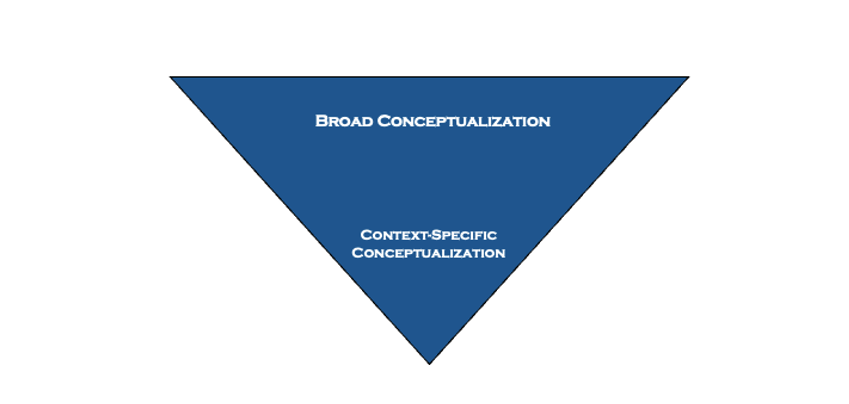
Figure 1: An inverted pyramid approach to teaching WPS.
Exposing learners to the broad conceptualization of WPS helps them understand how it is understood across sectors, enabling them to engage more constructively with one another and learn more from one another. This method recognizes the multiple approaches to understanding WPS and demonstrates its relevance across different sectors. For instance, when teaching WPS to students in a cybersecurity class or climate change class, one must expose them to a broader understanding of the WPS agenda and the different contexts that it is relevant to before focusing on the discipline-specific understanding of WPS as protection of women from the effects of the climate crisis or online-facilitated GBV. This approach exposes learners to the multidisciplinarity of WPS, ensuring they gain a general sense of its scope while grounding them in a field-specific approach.
Finally, to enhance the retention and application of WPS principles, the agenda must be recognized and understood as a nationwide commitment by society as a whole. As a signatory to the WPS agenda, we need to integrate conversations about WPS into the general public discourse. During our 2025 annual symposium in Saskatoon, we had the chance to discuss WPS and CNAP3 with Indigenous women involved in both the security sector and community initiatives. By the end of the discussion, there was a shared feeling that WPS could serve as another tool to hold the Canadian government accountable to its national and international obligations. Broad exposure, delegating responsibilities to civilians, and repetition are proven educational strategies that have previously benefited Canadians. The 3R principle (Reduce, Reuse, Recycle), introduced in the 1980s and 1990s, had an enormous impact on public environmental awareness. This initiative became a core part of public policy and household habits through public dialogue, assigning responsibility for implementation at all government levels—including municipalities—and through repetition in various learning environments and public engagement sites. Applying this approach would support and strengthen WPS education across the sectors we've discussed in an unparalleled way.
Conclusion
The need for pedagogical innovation in teaching gender issues is driven by the looming hostility towards gender research and activism globally. While advocacy for gender equality and feminist activism has historically been met with opposition, there is a surge in this opposition largely backed by governments and Western evangelical and faith-based organizations. This antagonism is manifesting in attacks on women’s rights activists, repression of human rights, regression of gains made on women’s rights, reduced support for academic/research work on gender, etc. In higher education institutions, it manifests as the discontinuation of courses such as women’s and gender studies and sexuality studies, the censorship of concepts used in gender work, and the withdrawal of funding for organizations working on gender issues. The broader consequence of the antagonism is the legitimation of hostile societal attitudes towards sexual and gender minorities and broader advocacy for gender equality across different spaces. Specifically, the slow progress on women’s rights is affecting the implementation of the WPS agenda, a trend traceable to the broader backlash against gender issues, raising concerns both within the higher education sector and in civil society. Academics and CSOs are walking a thin line as they adapt to changing attitudes toward their work while devising new ways to impart knowledge about gender issues to build capacity for implementing the agenda. This white paper addressed this dilemma by exploring innovative and alternative ways to teach WPS in the current age. This is done in the context of the 25th anniversary of the WPS agenda to take stock of what has been achieved, the gaps, and the opportunities for WPS pedagogy going forward. It starts by providing insights into the symposium organised by the RN-WPS on pedagogies for peace, which examined how WPS is being taught. The paper highlighted different pedagogies for peace, with a focus on higher education, civil society, and the security sector. This section notes that the pedagogy of WPS is based on the multiple conceptualizations adopted by sectors, resulting in diverse approaches. The paper proposed various methods for teaching WPS in an age of backlash. They are: 1) embedding the necessity of WPS to make it relevant for the audience, 2) expanding the conceptualization of WPS, 3) adopting a multi- and transdisciplinary approach to understanding WPS, 4) using an inverted pyramid approach, 5) developing WPS certification, and 6) creating measurable teaching objectives. Specifically, the IVA exposes learners to the broad conceptualization and contextualization of WPS across different sectors, then zooms in on the specific understanding of WPS relevant to their context. The paper suggested that it is important to consolidate the importance of experiences, context, and collaboration as integral themes in the teaching of WPS. We should embrace alternative knowledge systems and methods of learning and knowledge to consolidate current pedagogical approaches. It centers on the importance of learners' context and experiences as anchors of knowledge. This strategy will diversify and open up the space, not only for teaching WPS but also for strategies to facilitate its implementation and achieve gender equality. Finally, it notes the importance of Canada rethinking how to teach WPS if it wants to accomplish its numerous policies and strategies on WPS.
Dr. Yolande Bouka is the Canada Research Chair in Afrofeminist Thought and Political Transformation and an Associate Professor of Political Studies at Queen’s University. She also serves as co-director of the Research Network on Women, Peace, and Security and as a Visiting Professor at Nelson Mandela University’s Center for Women and Gender Studies.
Dr. Zainab Monisola Olaitan is a postdoctoral fellow at the Centre for International and Defence Policy and an Adjunct Assistant Professor in the Department of Political Studies at Queen’s University. She is also a Research Associate at the Institute for Pan-African Thought and Conversation (IPATC) at the University of Johannesburg.
References
Alonso. 2024. Student Interest in Gender Studies on the Rise, Despite Political Hostility. Inside Higher Education, April 5. Link.
Brechenmacher, S. 2025. The New Global Struggle over Gender, Rights, and Family Values. Carnegie Endowment for International Peace, June 5. Link.
Brown, V. 2023. Whither Professional Military Education: Socialization, Learning, and Culture Change in the Canadian Armed Forces. Canadian Military Journal, 23(3), 13-23
CFUW [Canadian Federation of University Women]. 2023. Responses to the recent attack at the gender studies class at the University of Waterloo. 30 June. Link.
Christensen, A. D., & Kyed, M. 2022. From military to militarizing masculinities. Norma, 17(1), 1–4. https://doi.org/10.1080/18902138.2022.2028428
COFEM [Coalition of Feminists for Social Change]. 2025. The Impact of USAID Cuts on Southwest Asia and North Africa Feminists. COFEM feature, July 21. Link.
Elshtain, J.B. 1995. Women and War. Chicago: University of Chicago Press.
Esprit de Corps. 2019. Women, Peace, and Security Agenda. Esprit de Corps Magazine 29(5).
Feldscher, K. 2025. As health data disappear from government websites, experts push back. Harvard T.H. Chan News, February 5. Link.
Fox, M. 2025. Honouring Black histories, shaping Black futures: Dr. Yolande Bouka is using the power of storytelling to amplify Black women’s voices and their impact on policy while continuing to advance Black scholarship at Queen’s. Queen’s Gazette, February 25. Link.
Global Network of Women Peacebuilders. 2015. CSO Perspectives on UNSCR 1325 Implementation 15 Years After Adoption. Global Report, Civil Society Organization Survey for the Global Study on Women, Peace, and Security.
Hendricks, C. 2015. Women, peace, and security in Africa: Conceptual and implementation challenges and shifts. African Security Review, 24(4), 364-375.
Jones, L., (ed.) 1983. Keeping the Peace (Women’s Peace Handbook). London: Women’s Press.
Luthra, S., and Rodriguez, B. 2025. What happens to health research when ‘women’ and ‘diversity’ are banned words? PBS News, March 30. Link.
Oloruntoba, SO., and Olaitan ZM. 2024. African communities have a lot of knowledge to share: researchers offer alternatives to Eurocentric ways of doing things. The Conversation Africa, August 5. Link.
PeaceWomen. N.d. Security Council Resolution 1325: Introduction. Link.
Raveendran, R. 2025. York University temporarily suspending new admissions to 18 programs. CBC News, February 19. Link.
Scott, K. 2025. Potential cuts to Women and Gender Equality Canada could take us back to Harper days: critical programs and life-saving services are on the line. Canadian Centre for Policy Alternatives, July 25. Link.
Shetty, A. 2024. Ex-student attacked University of Waterloo gender studies class to ‘instill fear,’ sentencing hearing told. CBC News, October 22. Link.
United Nations. 2024. Third Committee Delegates Urge Efforts to Reverse Global Backlash on Women’s Rights, End Gender Apartheid. Meetings Coverage of the General Assembly GA/SHC/4407.
United Nations. 2022. The Women, Peace and Security Agenda. UNOAU Gender Unit. Link.
United Nations Peacekeeping. 2025. Gender: Troop-Contributing Countries Achieving Gender Parity Targets. United Nations. Link.
United Nations Development Programme. 2024. More women must be at the table: Women, Peace, and Security after 24 years. United Nations. Link.
United Nations Development Programme. 2019. Parliaments as Partners Supporting the Women, Peace, and Security Agenda: A Global Handbook. UNDP Oslo.
United Nations. 2009. Human Security in Theory and Practice. Application of the human security concept and the United Nations Trust Fund for Human Security. Link.
United Nations Women. 2025. Women’s Rights in Review 30 Years After Beijing. New York: UN-Women.
WPS National Plan Academy. 2025. The Current State of WPS National Action Plans. Our Secure Future Organization. Link.
Morrison, C. 2025 Organizations sound alarm as gender equality department faces 81% budget cut. The Canadian Press, July 30.
[i]The GBA Plus is an analytical tool used to assess how men, women, and gender-diverse members experience the work environment differently. It helps identify varying needs and supports the development of policies and programs to reflect these diverse experiences. The GBA Plus training is delivered as a three-hour virtual course to help CAF personnel learn how to conduct GBA Plus analysis and help Defence Team improve outcomes, developing policies, programs and operations. The course focuses on how applying GBA Plus can enhance operational effectiveness and support recruitment and retention.