

Spotlights
home / research / spotlights
Each month, we spotlight one of our RN-WPS members in our newsletter. This is an important aspect of the network’s aim to support professional development, particularly for early career scholars, and intra-network collaboration. In these spotlights, we have spoken to a range of academic, researchers and policy professionals who offer diverse perspectives on the Women, Peace and Security (WPS) agenda, the work they do in the WPS space and the importance of networks like ours for creating space for advancing the agenda. You can see all of our previous spotlights on this page.
If you would like to be spotlighted in a future edition of our newsletter, please fill out this form for consideration.
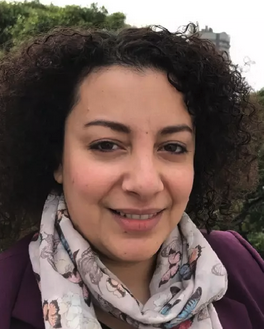
Rasha Jarum
Rasha Jarhum is the co-founder and director of the Peace Track Initiative (PTI), a research group hosted by Human Rights Research and Education Centre, at the University of Ottawa. Her work at PTI focuses on gender, peace and security, advocating for women’s, children’s and refugee’s rights.
Rasha is South Yemeni, and was invited by the UN Special Envoy to Yemen to support the peace talks held in Kuwait in 2016. She has also briefed the UN Security Council on Yemen and Women’s Rights to push for peace. She is also a founding member of the Women Solidarity Network in Yemen, a coordinator for the MENA1325 Network, and a member of the MENA regional Coalition of Women Human Rights Defenders.
-
Hi Rasha. To begin, please tell us what working on WPS, either in the academic, policy or advocacy space, means to you.
Rasha: In my home country of Yemen, WPS is a necessity. We had no NAP when the conflict began, so it prompted those of us in civil society organizations (CSO) to start thinking about women's status in this way. In 2015, we started lobbying for a WPS national action plan (NAP). Many donors were not keen and questioned its feasibility but five years later - after significant perseverance from Yemeni women - the NAP was published. There was big CSO involvement, given we have launched our own national agenda to set priorities for the NAP and shared those with the UNSCR. This experience in Yemen has made me an NAP expert. As a result, I was an advisor for the most recent Canadian NAP.
And now, reflecting on the past 25 years of the WPS and looking forward to the next era of the agenda, what do you think should be the main priorities for the upcoming 25 years?
Rasha: We need more accountability for implementation of WPS. I would like to see there be more legally binding elements within the agenda, so the people working on peace processes are not able to make excuses when they ignore WPS in their work.
Thank you. Finally, why do you think the spaces that are created through networks like RN-WPS, are important for advancing WPS?
Rasha: Knowledge sharing is so important, especially across generations. That is why it is great to have people representing different expertise in the same room. It is important for building on what we have learnt and gives us an edge over others. This is especially true when we have a mix of Global North and Global South idea sharing.
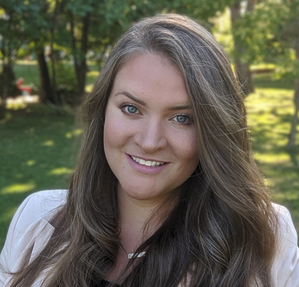
Vanessa Brown
Vanessa was the first Gender Advisor to Commander of the Canadian Defence Academy and has received a commendation from the Canadian Chief of the Defence Staff for her commissioned report applying gender-based and intersectional analysis to military education and culture at Canadian Forces. She currently teaches in the areas of leadership, military sociology, and institutional policy with a focus on gender perspectives and intersectionality and is also an International Expert on Women, Peace and Security for Alinea International and Kingston Leadership Team Incorporated, developing Women, Peace and Security training for the armed forces of Ukraine, Malaysia, Indonesia, Vietnam and Philippines.
-
Hi Vanessa. To begin, please tell us what working on WPS, either in the academic, policy or advocacy space, means to you.
Vanessa: In my work, WPS is central to understanding the disproportionate experience and inequality that exists in times of peace. These things are only then exacerbated in times of crisis and conflict. For example, I teach WPS to the military, so understanding the larger systems of power and how they play out in military contexts is vital learning to provide the correct response.
And now, reflecting on the past 25 years of the WPS and looking forward to the next era of the agenda, what do you think should be the main priorities for the upcoming 25 years?
Vanessa: For me, there has been evolution and growth in WPS. At first, it focused on conflict and the impacts on historically minoritized groups at the international level. Now, as we see more national implementation of the agenda, we are beginning to recognise that security concerns span a wider spectrum of instability which exists even in countries free from active conflict. Many more countries are reconsidering the domestic part of WPS and looking inwards in their implementation. So the next 25 years is about confronting these larger systems of power and the inequalities they create.
Thank you. Finally, why do you think the spaces that are created through networks like RN-WPS, are important for advancing WPS?
Vanessa: It is important that we are reminded often that we are not alone in our work, and this space does that so well. It is a space in which we advocate for WPS cross sectorally to combat multi-dimensional challenges. This work requires the diverse experiences and stories of the network members. Honestly, it is also just a really therapeutic space, and has let me think differently about our

Nicola Popovic
Nicola Popovic is the Director and Co-founder of GAIC Gender Associations International Consulting GmbH, a network of experts who work to improve capacities, policy development and action oriented research on gender, diversity, peace and security. In this role, she focuses on the implementation of UNSCR 1325, international law at the domestic and regional level, gender-sensitive security sector reform and the prevention and response to sexual and gender-based violence in peacekeeping missions. Nicola has previously worked as a project manager and policy advisor on UNSCR1325 as well as a gender training specialist at UN Women. She holds a Masters (LLM) in International Peace Support Operations from The Irish Centre for Human Rights.
-
At our symposium in February 2025, we spoke to Nicola about her work on what WPS still needs to succeed on its original goals.
To begin, Nicola, please tell us what working on WPS, either in the academic, policy or advocacy space, means to you.
Nicola: WPS is everything I do!
Very well put! Now, reflecting on the past 25 years of the WPS and looking forward to the next era of the agenda, what do you think should be the main priorities for the upcoming 25 years?
Nicola: For me, the original provisions of the WPS agenda have not been met - we are still struggling just to meet the status quo. I think that the challenge over the next years is simply to continue in our aims of reaching the original goals.
Thank you. Finally, why do you think the spaces that are created through networks like RN-WPS, are important for advancing WPS?
Nicola: These spaces are important for consolidating knowledge, advocating for the things we are passionate about and holding decision makers accountable.
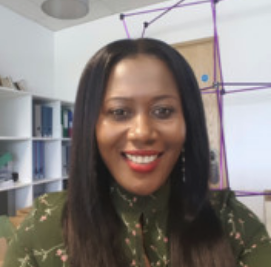
Nancy Annan
Dr Nancy Annan is an Assistant Professor at the Centre for Trust Peace and Social Relations at Coventry University in the UK. She holds a PhD in Peace and Conflict Studies and has 15 years of experience in peace, security, global development, and gender especially in Africa. Her recent research investigates the impact and complexities of, and the peacebuilding initiatives in the Anglophone conflict in Cameroon. Nancy is currently a research lead at RN-WPS. She previously worked at the Kofi Annan International Peacekeeping Training Centre (KAIPTC) in Accra, Ghana. She was also involved in the EU Horizon 2020 project on PeaceTraining and, in 2014, she was selected by the US Department of State for their International Leadership programme as one of the global women leaders promoting peace and security
-
At our symposium in February, we spoke to Nancy about what the priorities should be for the future or WPS and why she feels spaces like RN-WPS are important for enhancing the agenda.
To begin, Nancy, please tell us what working on WPS, either in the academic, policy or advocacy space, means to you.
Nancy: For me, WPS is about many things: creating spaces for women to share experiences, accepting these experiences as valid and important and disseminating them to others; demonstrating the capacity and expertise of women in peace and security and; fostering spaces for female role models to transfer their knowledge to younger generations.
Agreed! Now, reflecting on the past 25 years of the WPS and looking forward to the next era of the agenda, what do you think should be the main priorities for the upcoming 25 years?
Nancy: We need more work on women in digital spaces, which involves increasing the use of modern technology to enhance WPS, in both education and practices.Thank you for reminding us of that! Finally, why do you think the spaces that are created through networks like RN-WPS, are important for advancing WPS?
Nancy: The network brings together incredible women doing incredible work, allowing us to learn from each other and those working in different sectors.
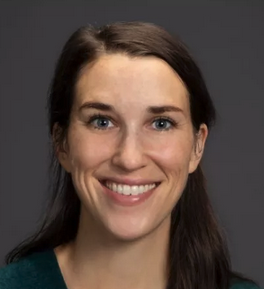
Elizabeth Good
Elizabeth Good is an International Security Program Fellow at Harvard Kennedy School’s Belfer Center, a USIP-Minerva Peace and Security Fellow, and received her Ph.D. in Political Science from Northwestern University. She is also a Research Fellow at Harvard Kennedy School’s Women and Public Policy Program and is the International Relations Editorial Assistant for Perspectives on Politics. Elizabeth’s current research focuses on women’s representation in peace negotiations. In this work, she asks how gendered power dynamics influence peace negotiation outcomes for women and tests the conditions under which women secure substantive outcomes.
-
Elizabeth attended our symposium in February 2025, where we spoke to her about how her work intersects with the WPS sector and where she hopes the agenda will go in the future.
Hi Elizabeth. To begin, please tell us what working on WPS, either in the academic, policy, or advocacy space, means to you.
Elizabeth: I think that WPS is a beautiful intersection of issues, concepts, and ways of thinking. I find it intellectually rewarding and incredibly important for progress in a range of things: social norms, gender equality, human security, and post-conflict transitions. WPS offers us the opportunity to push the boundaries in all these areas - and many more - of peace and security.
And now, reflecting on the past 25 years of the WPS and looking forward to the next era of the agenda, what do you think should be the main priorities for the upcoming 25 years?
Elizabeth: I want us to move into a place where women can publicly disagree with each other on issues of Women, Peace and Security. I also think we would benefit from broadening our definition of security to incorporate different types of equality in addition to concerns about women’s bodily harm and safety.
Thank you. Finally, why do you think the spaces that are created through networks like RN-WPS, are important for advancing WPS?
Elizabeth: The network allows us to collaborate on similar issues from different angles. Being in a room with people thinking critically and strategically about WPS issues is invaluable.
Emma Fingler
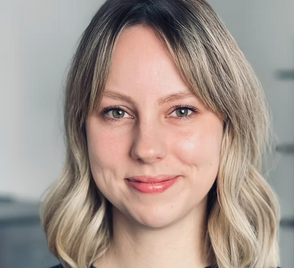
Emma Fingler is a SSHRC-funded PhD Candidate at Queen’s University working on gender, disaster response operations, and regional governance in South and Southeast Asia. She is a Fellow with the Climate Security Association of Canada and a Graduate Research Fellow with the Centre for International and Defence Policy (CIDP) at Queen’s. Emma has previously been a recipient of the Women in Defence and Security (WiDS) Graduate Scholarship, a Canada-Asia Young Professional Fellow with the Asia Pacific Foundation of Canada and a Graduate Fellow with our network. Emma will be defending her PhD this Fall and is searching for her next professional endeavour, so please reach out to her with any career opportunities!
-
At our Symposium in February, we spoke to Emma about her views on WPS and being a part of our network.
Hi Emma. To start off, please tell us what working on WPS, either in the academic, policy or advocacy space, means to you.
Emma: I work on the ‘No Women No Peace project’ for the ASEAN team. The idea of this project is that you cannot have peace without inclusion. In disaster response - the subject I work on - this means that response strategy will not work unless you consider the needs of all those affected by a given disaster. This is because while disasters are natural, their impacts are man-made and therefore impacted by social dynamics. WPs can be used to overcome this inequality on impact. Disaster response cannot progress without including gender and WPS has the kind of international support that makes it a good avenue for doing this.
Thank you. Now, reflecting on the past 25 years of the WPS and looking forward to the next era of the agenda, what do you think should be the main priorities for the upcoming 25 years?
Emma: I want to see continuing momentum. If not, there is a chance that we lose the unique gender aspect of WPS and that the movement gets co-opted by other parallel work. We need to bring it back to its roots.
And finally, why do you think the spaces that are created through networks like RN-WPS, are important for advancing WPS?
Emma: This community goes beyond each of our disciplines, and this cross pollination is so important. We cannot have academia without policy and vice-versa. Here, we have both things working to help each other.

Brook Morrison
Brook Morrison is a PhD Candidate at the University of York in the UK where she researches the WPS agenda in the context of NATO’s gender mainstreaming process as well as how NATO’s commitment to conduct its core tasks of defence and deterrence, crisis prevention and management, and cooperative security in accordance with international human rights law. She also holds a Bachelor of Business Administration from the Royal Military College of Canada, an MA in Human Security and Peacebuilding from Royal Roads University and an LLM International Human Rights Law and Practice from the Centre for Applied Human Rights at the University of York. With 25 years of experience as an Officer in the Canadian Army, Brook has been deployed to peace support operations in Sierra Leone, Egypt and Israel, Palestine and Nairobi in connection with the African Union.
-
Brook attended our Confronting Backlash and Barriers from the Global to the Local symposium in June 2025, and we spoke with her about her experiences at the event and with WPS in general.
Hi Brook, thank you for chatting with me today. To begin, could you share what the WPS agenda means to you, either personally or professionally, and what first drew you to work on issues related to WPS?
Brook: I first became aware of issues related to the WPS agenda in 2015 while posted as an instructor at the International Peace and Security Training Centre (IPSTC) in Kenya. As an instructor at IPSTC, I had the opportunity to participate in other training sessions. After attending training on Protection of Civilians (PoC) and Conflict-Related Sexual Violence (CRSV) training, I recognised the need to integrate these cross-cutting issues into the Logistics Planning for Peace Support Operations I was teaching on.
Now, as we reflect on 25 years of UNSCR 1325, what do you think has been the most significant accomplishment in WPS and what are the most urgent priorities for the next 25 years?
Brook: The operationalisation of WPS agenda across NATO, UN Department of Operations, the Canadian Armed Forces and other militaries is one of WPS's significant accomplishments. However, we need to distinguish core WPS concepts from militarised concepts of gender mainstreaming and gender perspectives, which are often linked to outcomes such as improved situational awareness, mission success, and operational effectiveness. Tying WPS too closely to these outcomes makes it vulnerable because if the concepts of what constitutes operational effectiveness or what leads to mission success changes, the support for WPS may be eroded. The priority should be to return to the human rights and peacebuilding fundamentals and the obligations associated with UNSCR 1325.
Looking back on the symposium in June, what was your main takeaway from the event and was there anything you heard that challenged or changed the way you think about WPS that you would be happy to tell us about?
Brook: My main takeaway was the need to integrate the WPS agenda into local and provincial organisations working on domestic security issues (women's) in Canada. Greater awareness of WPS among local advocacy groups could help them leverage Canada's national and international UNSCR 1325 obligations. The conference speaker lineup really highlighted the potential and the need for greater awareness of UNSCR 1325 and subsequent resolutions across national advocacy groups.
Finally, on WPS spaces specifically, we would love to know: why do you think communities like RN-WPS are valuable for those working on WPS-related issues and what can networks like ours do to sustain momentum for the WPS in Canada and globally?
Brook: The RN-WPS Symposium offered a valuable forum, bringing together academics, emerging scholars, civil society organisations, and local advocacy groups to discuss, listen, learn, and support each other's efforts while fostering a sense of community. To sustain the momentum, we need to continue the dialogue, directly challenge emerging narratives that disparage the effectiveness of the WPS agenda, allow for disagreement, and ensure WPS topics remain part of the broader security discussions.
Frieda Garcia Castellanos
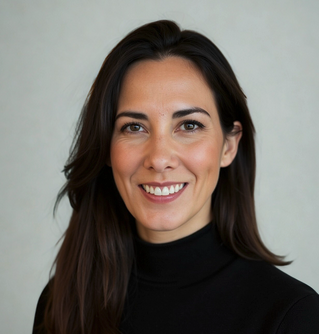
Frieda García Castellanos is a practitioner and consultant specializing in Women, Peace and Security (WPS) and gender integration in defense and policy institutions. Formerly the Commandant’s Gender Advisor at the Inter-American Defense College in Washington, D.C., she has supported U.S. SOUTHCOM and NORTHCOM on gender analysis, training, and institutional capacity-building across the Americas.
She is the Co-Founder of Meridiana, a consulting firm advancing strategic alignment for gender justice serving the Inter-American system. Currently, she is a Research Assistant on Conflict and WPS at Queen’s University, and serves as Director for Membership and Outreach and Producer/Editor of Bylines & Frontlines at Women in International Security – Canada (WIIS-Canada).
-
Hi Frieda, thank you for chatting with me today.
To begin, could you share what the WPS agenda means to you, either personally or professionally, and what first drew you to work on issues related to WPS?”
Frieda: The WPS agenda represents both a professional mission and a personal conviction for me. It embodies the recognition that peace and security are not sustainable without women’s equal participation and protection. I was drawn to WPS through years of working in defense, policy, and education across the Americas seeing firsthand how gender perspectives transform institutions and outcomes when integrated meaningfully into decision-making and operations.
Now, as we reflect on 25 years of UNSCR 1325, what do you think has been the most significant accomplishment in WPS and what are the most urgent priorities for the next 25 years?
Frieda: The most significant accomplishment of the WPS agenda has been its institutionalization. Moving from advocacy to actual policy frameworks that require militaries, governments, and international bodies to act. Yet, the next 25 years must focus on accountability and implementation. We must confront backlash, resource inequities, and digital threats to women’s rights while ensuring that gender expertise is not symbolic but operationally embedded at every level.
Looking back on the symposium in June, what was your main takeaway from the event and was there anything you heard that challenged or changed the way you think about WPS that you would be happy to tell us about?
Frieda: The June symposium reaffirmed for me how collective reflection and intergenerational dialogue are critical to advancing WPS. Hearing from practitioners and scholars reminded me that progress requires both evidence-based policy and lived experience. I was particularly challenged to think about how to sustain WPS momentum amid disinformation and polarization, and how to keep empathy and rigor at the center of our work.
Finally, on WPS spaces specifically, we would love to know: why do you think communities like RN-WPS are valuable for those working on WPS-related issues and what can networks like ours do to sustain momentum for the WPS in Canada and globally?
Frieda: Communities like RN-WPS are vital because they create the connective tissue between research, practice, and advocacy. They provide spaces to share lessons, amplify voices, and strengthen collective resilience. To sustain momentum, networks must remain inclusive, action-oriented, and digitally adaptive by bridging national and global efforts while ensuring that those most affected by insecurity help shape the solutions.
Oyuntuya Shagdarsuren
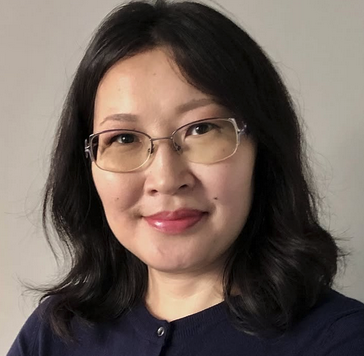
Oyuntuya Shagdarsuren works at Alinea International as an Agricultural Innovation Systems/Extension Specialist focusing on gender, food security and enhancing community climate options for adaptation and resilience in Mongolia. She is also a PhD candidate at University of Bonn researching political and cultural change in the context of sustainable development. in Mongolia.
Recently, Oyuntuya obtained an M.A. in Political Studies from the University of Saskatchewan and became a member of Women in International Security Canada (WIIS-C). She co-developed a report for the emerging scholars’ network within the RN-WPS. She also presented on the topic of “Violence, Securitization and Militarism in Extractive Sector Development: International trends and their manifestations in Mongolia” at the Prairie Political Studies Association Conference in 2024 and made a Pecha Kucha presentation titled “Role of Women in Conflict Resolution: Mitigating Negative Impacts of Mining in Mongolia through International Lending Institutions” at the RN-WPS Conference in June 2025.
Prior to joining Alinea International, Oyuntuya was an international development specialist working on bilateral and international projects in Mongolia. She holds an M.Sc. in Extension for Natural Resource Based Livelihoods from the University of Reading, UK.
-
Hi Oyuntuya, thank you for chatting with me today.
To begin, could you share what the WPS agenda means to you, either personally or professionally, and what first drew you to work on issues related to WPS?”
Oyuntuya: The WPS agenda is an important international instrument that enables women to take part in the matters of war and conflict, an area that was traditionally dominated by men. Women strive to establish an international legal system and build transnational solidarity to overcome the problems of ‘tribal nationalism’. I was driven to work on WPS when I realized that women’s contributions to peace building are often invisible, largely due to mainstream research and media that is biased towards men. I thought that as a feminist researcher I should highlight the role that women take on, often at great personal costs and sacrifices with little recognition or reward for their efforts.
Now, as we reflect on 25 years of UNSCR 1325, what do you think has been the most significant accomplishment in WPS and what are the most urgent priorities for the next 25 years?
Oyuntuya: The adoption of the WPS agenda in 2000 was a significant milestone that institutionalised women’s rights across the agenda’s four pillars of implementation: prevention, participation, protection, and relief and recovery. However, women’s empowerment was not explicitly embraced until 2015 with the adoption of UNSC Resolution 2242 which issued a mandate for WPS to be mainstreamed as a crosscutting subject in all thematic areas. Women’s and girls’ empowerment is now seen as critical to conflict prevention and maintaining international peace and security.
When I was growing in socialist and post-socialist Mongolia, there was a lot of awareness around me about the negative aspects of war and the value of human life. Nowadays, I feel like violence is being normalized through the media and this is something we shouldn’t accept. Violence can never be normalized. We should seek all possible ways to maintain peace, find allies and build solidarity and understanding across nations. Education is the most powerful tool and women’s and youth empowerment through education should be a priority for the next 25 years. Moreover, women’s political empowerment where women are seen as agents of change needs to be taken seriously.
Looking back on the symposium in June, what was your main takeaway from the event and was there anything you heard that challenged or changed the way you think about WPS that you would be happy to tell us about?
Oyuntuya: The June symposium has brought together many voices. I particularly appreciated the progress made by Indigenous women and youth in Canada through movements like “Idle No More” and the Saskatchewan Anti-Violence Research that engages 137 organizations. I was very impressed by their determination and the impact of their work. Cybersecurity was a completely new topic for me that shed a light on how activists can operate safely in the online space. Feminist methods that were shared about “teaching back” like exposing imperfection and showing vulnerability were very valuable, eye-opening experiences I received through my classes at the University of Saskatchewan. We also questioned whether the military can be feminist.
Finally, on WPS spaces specifically, we would love to know: why do you think communities like RN-WPS are valuable for those working on WPS-related issues and what can networks like ours do to sustain momentum for the WPS in Canada and globally?
Oyuntuya: These communities help us foster inclusive, multigenerational scholarship and practice in the WPS field. It’s a space where scholarship, advocacy, and lived experiences converge and cultivate the next generation of feminist researchers and practitioners. We believe that the WPS communities will grow based on our shared commitment to building an inclusive, resilient and impactful global community. Our spaces are valuable because they are innovative, inclusive, supportive and empowering. We offer fresh perspectives on global challenges like militarism and systemic inequalities while resisting narrow definitions of empowerment and instead envision transformative global futures.